Why do people love ballet? What the Rambert Grades team says...
People love ballet because it moves us in more than one way: the drama, the artistry and the thrill of doing something hard beautifully. It’s World Ballet Day, so we asked the Rambert Grades team a simple question: why do you love ballet? There is no single answer, and this is only our take.
Here is what we love, in our own words, and a place for you to add yours.
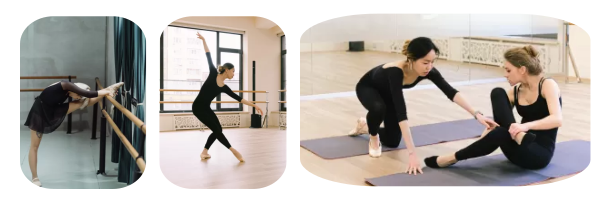
Research with adult ballet students in Australia, Canada and the US points to four things that come up again and again.
- The challenge. Ballet asks a lot of balance, flexibility and concentration, and that is part of the pleasure.
- Confidence. One dancer in a Canadian study said ballet “makes me feel like I can tackle more things.”
- Pure enjoyment. Advanced dancers in a US study danced because “it was so pleasurable.”
- Friendship. Many students described the comfort of learning alongside other people.
Source: Psychology Today’s summary of three adult ballet studies
What do the Rambert Grades team love about ballet?
For World Ballet Day, we asked the people around Rambert Grades to finish the sentence “What I love about ballet is...” Here is what came back.
Mayerling: ballet at its most dramatic
Two of us picked the same ballet, and it is easy to see why.
“Mayerling – with Edward Watson – divine.”
Libby, Head of Quality Assurance and Enhancement
“Mayerling ❤️”
Amelia, Marketing Manager
Kenneth MacMillan made Mayerling for The Royal Ballet in 1978, and it is not a fairytale. It tells the story of Crown Prince Rudolf of Austria-Hungary, forced into a marriage he does not want and drawn into the intrigue of a rigid, oppressive court. The Royal Opera House describes the role of Rudolf as one of the most demanding ever created for a male dancer, and the ballet follows his unravelling through a series of “shockingly charged pas de deux” with his mother, his bride and his mistress.
That is what we love about it: ballet used for big, honest feeling. MacMillan sets grand spectacle, such as a royal wedding and a ballroom, beside scenes of real intimacy, and the music is Liszt, arranged by John Lanchbery, “a sweeping soundscape to match the high emotion of the drama.” You do not need to know any ballet history to feel it. A dancer who can carry all of that, and make you believe every moment, is what Libby means by divine, and for us Edward Watson is exactly that.
If you want to see what we mean, watch the bedroom pas de deux.
You can read more about the ballet on the Royal Opera House website.
Why The Royal Ballet love performing Mayerling

Libby has more to say about why these ballets stay with us, and it comes down to one idea: that strict rules can be where the strongest feeling lives.
Manon and Mayerling: ironclad rules of classical technique and rigid social hierarchies are a pressure cooker for raw, messy human emotion. MacMillan takes the pristine grammar of the ballet studio and twists it into desperate, agony, and psychological unravelling.
Wayne McGregor’s Infra uses hyper-extended, clinical geometry to house profound tenderness. Stripping away traditional narrative to push the human body to its absolute skeletal limits. Yet, beneath sharp lines and algorithmic precision lies a haunting vulnerability.
Ultimately, whether it’s MacMillan’s tragic aristocracy or McGregor’s modern architecture, ballet proves that true artistic freedom doesn't come from abandoning discipline; it comes from building a cage so solid that the spirit can escape.
Libby, Head of Quality Assurance and Enhancement
Why The Royal Ballet love performing Manon
In the Middle, Somewhat Elevated: ballet with the edges pushed
“In the Middle, Somewhat Elevated.”
Hannah, Director of Training and Examinations
Hannah’s choice is a very different kind of ballet. William Forsythe made In the Middle, Somewhat Elevated in 1987 for Paris Opera Ballet, to a score by Thom Willems. There are no kings or courts here. It is fast, sharp and athletic, and it takes classical technique to its limits, with dancers off balance, bodies stretched and steps that look as though they should not work and then do.
For a teacher of dance, that is a thrilling thing to watch. It shows how much room there is inside classical technique for risk and invention, and why a strong foundation lets dancers go so far with it. It is a long way from the drama of Mayerling, and it is just as good, which is why ballet can touch people in such different ways.
Explore coursesPrecision. Power. Forsythe. | In the Middle, Somewhat Elevated
Is ballet only for children?
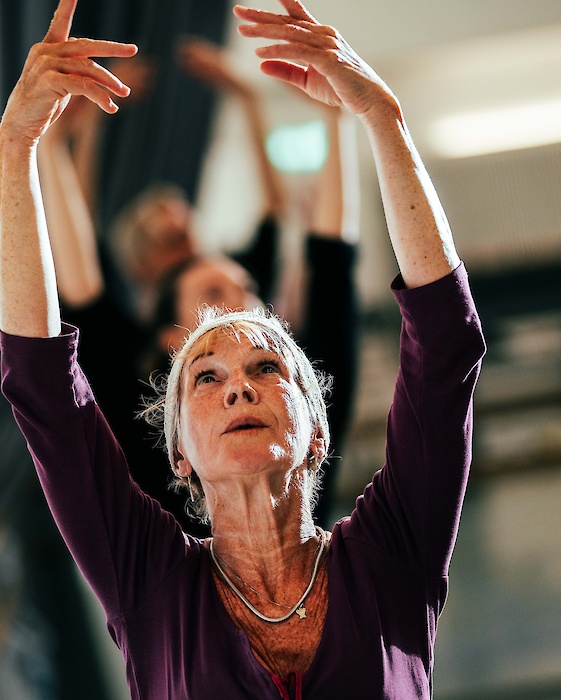
No. One US study interviewed 24 women aged 23 to 87 who dance ballet for pleasure. For most of them, ballet is a core part of how they see themselves and express themselves.
Source: Dancing while Aging, Anthropology and Aging, 2020
Does Rambert Grades teach ballet?
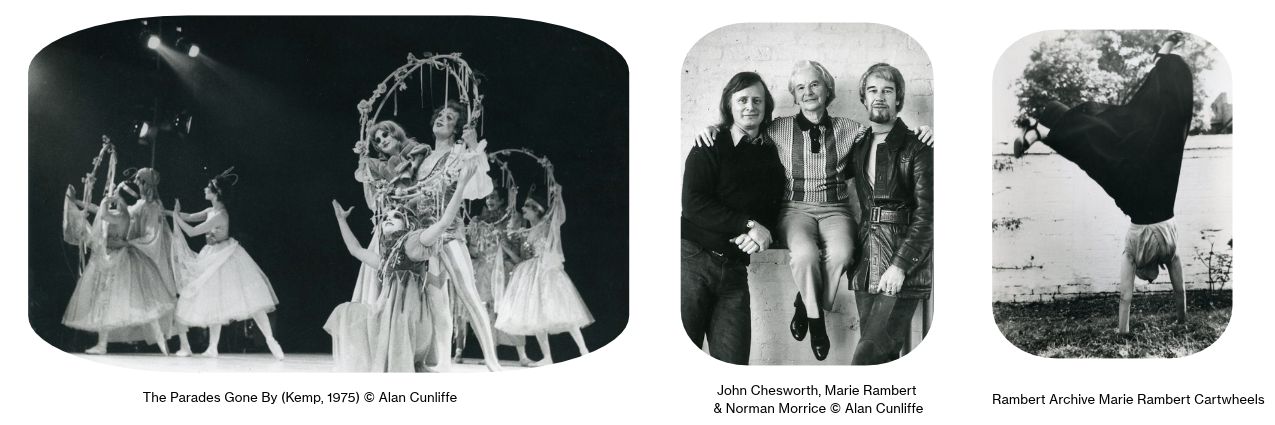
No. Rambert Grades is a contemporary dance syllabus with eight grades, each built on three equal strands: technique, performance and creativity. But it is rooted in ballet legacy. Marie Rambert, a Polish dancer who had performed with the Ballets Russes, arrived in London in 1914 and opened her school in 1920. Her students’ first performances in 1926 grew into today’s Rambert. Rambert School and Rambert are separate organisations that share her legacy, and together they created Rambert Grades. Teachers registered with the Royal Academy of Dance also receive a discount on Rambert Grades membership.
Curious? See what’s on at Rambert Grades.
Do contemporary dancers still take ballet class?
Yes, and more than you might expect. Most of the dancers at Rambert trained in ballet, and ballet class is part of their working week, alongside other classes, as conditioning. A daily class builds strength, balance and control, and all of it carries into every other kind of movement.
For us, that is the best answer to why ballet matters beyond the stage. It is not only something to watch and love on World Ballet Day. It is a way of training the body, and a shared language that connects dancers of every style. Whether you teach contemporary dance, ballet or both, it is a good reason to keep ballet in the conversation.
What do you love about ballet?
On World Ballet Day, and every day after, we would love to hear yours. We have asked the same question on the Rambert Grades Facebook page, so head over there and tell us in a comment what you love about ballet, whether you dance, teach, watch or used to dance years ago.