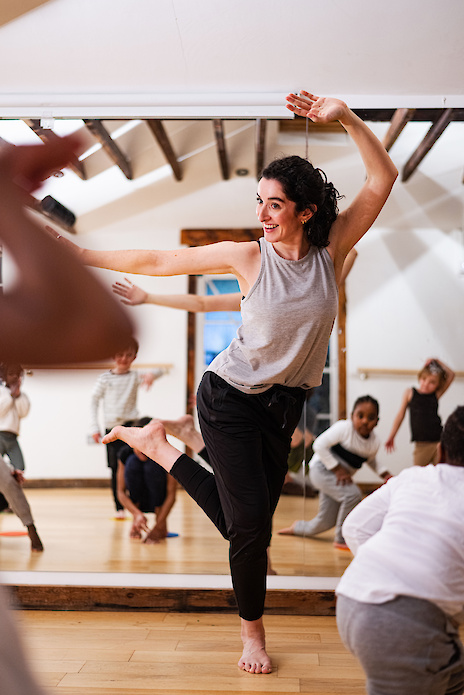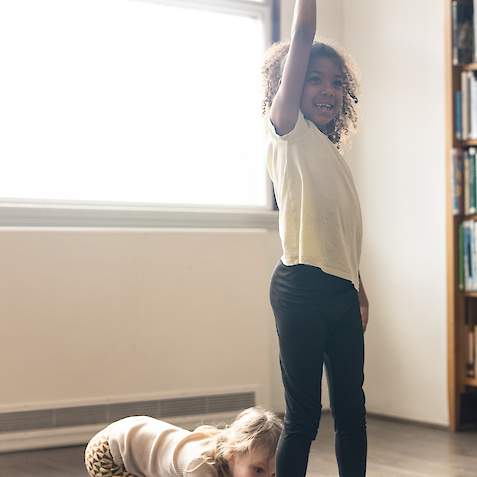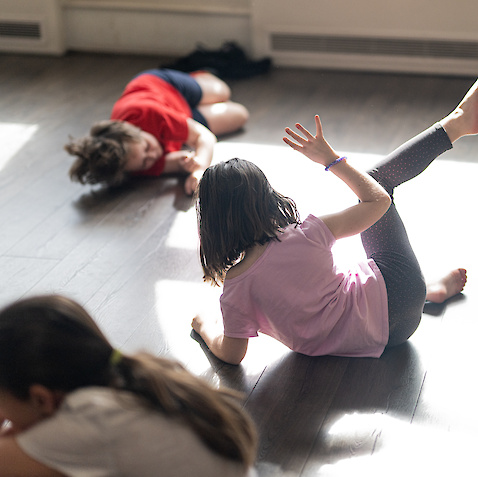
Before children know the names of dance steps, they already know a lot about movement.
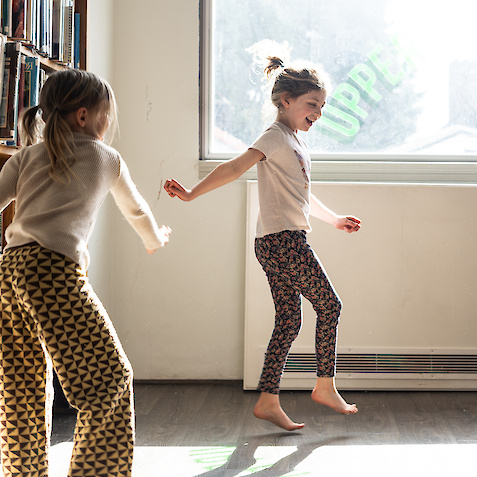
They run. Jump. Wobble. Spin. Creep. Stretch. Make themselves enormous, then tiny. They know how to move like they're rushing through the rain, floating through space or trying very hard not to wake a sleeping dragon.
For a young child, that can be where contemporary dance begins.
Contemporary dance doesn't have to start with complex choreography or years of previous dance training. For young dancers, it can offer a playful and structured way to build physical skills, musicality and confidence while giving them something incredibly valuable from their very first classes: the opportunity to have ideas of their own.
But if contemporary dance isn't the mainstay of your own training or teaching, introducing it to younger students can feel like a leap.
What do you actually teach? How much should children copy and how much should they create? How do you plan a class around imagination without losing the structure that young dancers need?
The answer might be more familiar than you think.
Start with what young children already do brilliantly
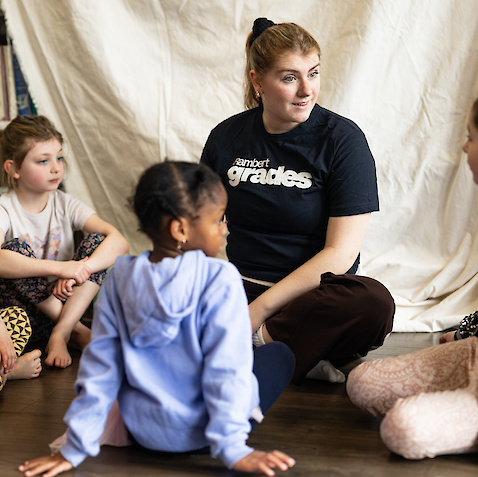
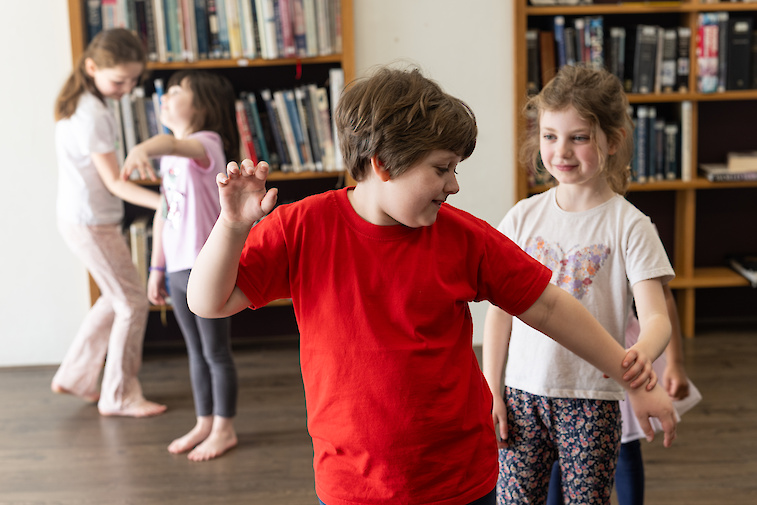
Ask a group of five-year-olds to travel across the studio and you'll probably get a fairly familiar collection of runs, skips and jumps.
Tell them the floor has suddenly turned to jelly and things become much more interesting.
Creative prompts give children a reason to explore movement. A theme might encourage them to travel at different speeds, discover new shapes, change levels, respond to music or experiment with moving heavily and lightly.
They're playing, but there's plenty of dancing happening too.
Children are developing coordination, balance and spatial awareness. They're listening and responding to music, beginning to understand different movement qualities and gradually building their physical vocabulary.
And because there isn't always one single 'right' answer, they're also learning that their own ideas have value.
Creative doesn't mean unstructured
A room full of young dancers and an open-ended creative task can sound slightly terrifying.
But creativity in a contemporary dance class doesn't mean simply putting on some music and hoping for the best.
In fact, young dancers often have more freedom to explore when there is a clear structure around them.
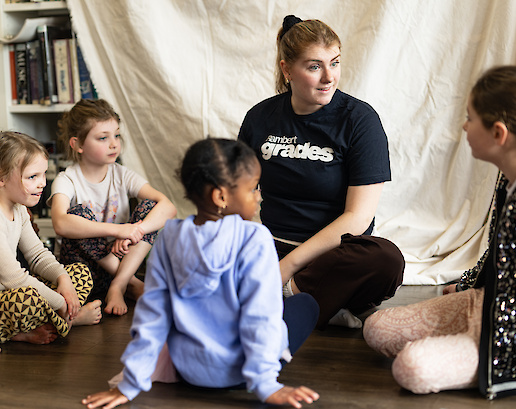
Rambert Grades' Creative Movers, Pre-Primary and Primary syllabus is built around a structured, skills-based framework. Physical and spatial skills develop alongside imaginative exploration, and teachers use creative themes and prompt cards to help shape activities and lesson plans.
A class can still have familiar routines. Dancers can repeat material, practise particular physical skills and build on what they learned the week before.
The difference is that alongside learning what to do, children are given opportunities to explore how they might do it.
Swimming with whales might become an exploration of weight and flow. A journey to the moon might introduce levels, pathways or changes of speed. One idea can produce completely different movement from every child in the room.
That's not an absence of technique. It's another way of developing it.
And you don't have to be a contemporary specialist
Perhaps you have spent years teaching ballet. Perhaps your timetable is built around several different dance styles. Perhaps contemporary is something your older students do elsewhere, rather than something you have previously considered teaching yourself.
Teaching young children contemporary dance doesn't require you to turn yourself into a professional contemporary performer first.
Many of the teaching skills you already use matter here too: observing your dancers, communicating an idea clearly, creating progression, adapting for different children and understanding when to challenge and when to give someone a little more time.
Rambert Grades' training for these Entry Level qualifications is open to dance teachers, artists and practitioners as well as early years and primary educators, and is specifically designed to give teachers the framework and resources to confidently deliver contemporary dance with young children.
Sometimes learning a new syllabus isn't about starting again as a teacher.
It's about discovering a new way to use the skills you already have.
A first dance class, not just another dance subject
A young child's first experience of dance doesn't have to depend on them already knowing what style they want to learn.
Some children love music. Some never stop moving. Some have enormous imaginations. Some thrive on learning a sequence exactly; others suddenly come alive when they're invited to make a choice.
Creative Contemporary Dance can make room for all of them.
There is no previous dance vocabulary they need before they can begin. Their physical skills develop through the dancing itself.
For children already learning ballet, tap, modern or another style, that creative experience can sit alongside their existing training. For somebody coming through the studio door for the very first time, contemporary can simply be where their dance journey starts.
Could contemporary dance have a place in your studio?
If you've been thinking about introducing contemporary dance to your younger students, our next online Creative Movers, Pre-Primary and Primary Syllabus Training takes place on 26–27 September 2026.
Across two live sessions, you'll explore the creative framework, practical teaching approaches and resources for all three grades, giving you the tools to bring Creative Dance for Early Years into your own classes and enter your dancers for Rambert Grades examinations.
Find out more about Creative Movers, Pre-Primary and Primary Syllabus Training
Our next online Future Movers Syllabus Training takes place on 11 October 2026, for teachers ready to take that contemporary dance journey a little further.
Find out more about Future Movers Syllabus Training
You don't have to know exactly what a contemporary dance class for a five-year-old should look like before you start.
That's what the training, the framework – and quite often the five-year-olds – are there to help you discover.